Presentation Day

Presentation Day IDDS 2015

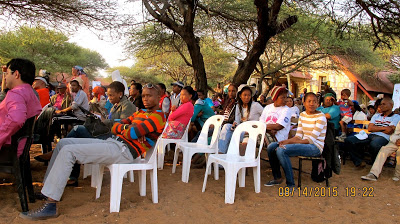
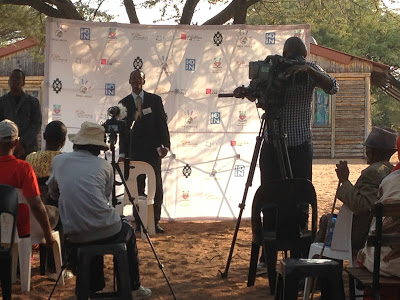
We got a great showing! We kept having to pull out more benches from the church to seat the people coming. I hope our audience found our prototypes interesting – as a participant, I was impressed with what we were able to do in just two weeks, especially considering that our prototypes were constructed in just four days. Internally, and I know I was not alone in this feeling, I wish we had more time to iterate through the feedback and innovation process. Not everyone’s first tries will feel successful – however, and I know this from my experiences from hackathons as well – we are also not good judges of the value of what we create. We will have baggage of intentions and expectations, and our audience can judge our first drafts based on merits alone, and often it’s much better than what we think. Some community members expressed concern about the what next? You all leave and then what? I know that a parallel process to answer this is underway, so that the local community should have enough interest to express this concern rings of some success to me.

Written by: Claudine Chen

 IDDS 2015 Closing Ceremony

Working

Working

It’s make-it-work time. I went to Ghanzi to scope out our material options. On the list was sheet metal, rod, hardened steel blades. These things exist, but not necessarily in the dimensions desired. There are three hardware stores and they all carry similar stock.

We also stock up on groceries, and it is in the supermarket where we encounter the glory of the openness of where we are. I was told upon arrival in Botswana that people say hello even to strangers. Since then I’ve been saying “Dumela” to people I make eye contact with and I register a warm feeling when they respond with a smile. Now in the market, a complete stranger asks me what happened to my neck (I have chronic excema), and Anirudh is being told that he as beautiful hair, hair like a woman’s. I find this open directness absolutely refreshing. What is on my neck is not some shameful thing that you can’t ask about – ask if you want to know! And the backwards compliment to Anirudh’s hair has an air of playful joking, and brings a laugh to my lips anyway.

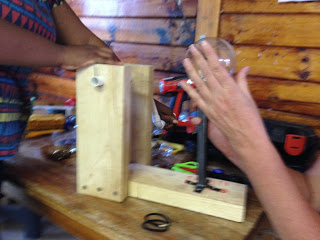
We all depend on Aaron’s welding. Did anyone document his hard work in progress? The fodder chopper is an impressive thing, sturdy as all-get-out. Our own weeder drum, made out of thick steel is also an impressive feat of brute force – the bit of steel is cut with an angle grinder, and Lulu pounded the steel held in a makeshift wooden vise made out of 2x4s and c-clamps. it may not be a thing of beauty, but it is a thing.

Written by: Claudine Chen

Camp Fires & Star Gazing

A wonderful thing about having IDDS in the middle of the Kalahari Desert is that every night we get to witness a brilliant panorama of stars. With no air pollution or streetlights in sight, constellations are bountiful. The other day a family staying within the D’Kar community even invited us to use their telescope for a 2-hour star gazing session. We were able to see Saturn and its rings! We finished the night with an intellectual conversation and lecture on the history of constellations.

If we are not busy start-gazing in the evenings, we are eagerly sharing stories and laughing at the campfire. Being in the middle of the desert means that it is absolutely freezing in the evenings…fortunately, this encourages us to all congregate in one place, close to the fire. Thus far we have watched the process of charcoal making, heard traditional San stories, practiced West African dance, and even played board games together all while sitting around the camp fire. It is here that friendships are created and solidified.

IDDS Camp Fire

Build-Its!!

Build Its 1

Build Its 2

Build Its 3

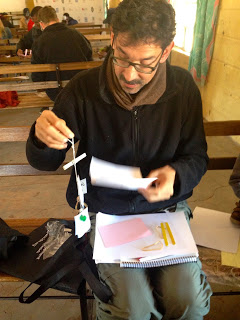
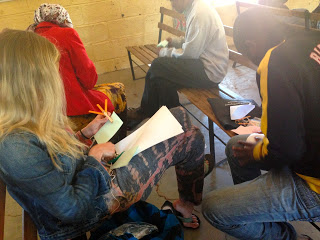
The first week of the summit was focused on helping participants grasp the concepts of design thinking, sketch modeling, and prototyping. In order to encourage teamwork and a mindset of continuous inquisitiveness and problem solving, we split the participants into groups to perform a Build-It activity. Each individual in each team was given a random bag of supplies and asked to create something useful to him or her using only the materials in the bag. After twenty minutes the model was given to another person to be improved upon. This continued until each model had been tweeked and improved upon by each member of the team. Final products of each group were then presented to everyone for inspiration and to get the creative juices flowing for the real prototyping!

Building with the San People by Tamanna Islam Urmi

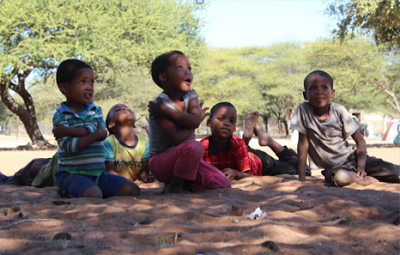
San Children - D'Kar, Botswana

After a 9 hour journey in the bus of University of Botswana, we landed to the training center of D’Kar and got welcomed by a group of local participants, IDDS organizers and wood fire in a circular fenced area. Little did I know that this circular area around is going to a defining feature of my experiences in the next two weeks.

The only light around us were the light inside the bus, a few dimming lights afar in the wood-houses where we will reside for the summit and the dark orange fire. I quickly shook hand with the welcoming group and glanced upwards. The huge sky with no interruptions but a few thorny twigs is holding up covering as much as the eyes can see. The pitch black sky is filled with millions of sparkling stars and a cloudy white band has spanned across the middle of the sky! It took me a few seconds to process that it’s the Milky Way, so clearly drawn out, and what we can see is one hand of the spiral we live in. The band goes from one side to the horizon, or as far down we can see, to the other side touching horizon. I quickly put my luggage in my triple room and ran outside to look at the sky while feeling the warmth of the fire.
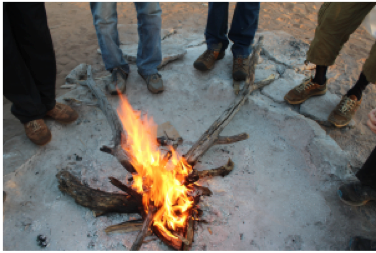
The Morning FIre
Mornings started with a gathering around the fire again. The next two weeks we will immerse in the community, learn to design with people, roll on the Kalahari sand in the light of setting sun for treating our backs and end the day sitting by the fire with an amazing and amazingly diverse group of people. The place we are in is a small village beside the Kalahari Desert. The sand here has a reddish tint to it, water is scarce but in the training center we get 24 hours supply of water from a pump somewhere around. It’s winter here at this time with very cold nights and mildly cold days. Plants around has low-hanging thorny branches with green leaves that looked grayish green from a distance.
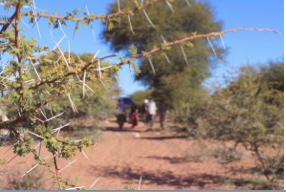
thorns

The top of the land has a loose layer of sand about ten to fifteen centimeter deep with a harder and denser layer below it. Lying down on the sand therefore leads the loose layer on top to form the shape around the back. That at the back along with the warm winter sunlight from the top is beyond soothing. The first time I saw the moon was the first night. It was quite strange to see the moon in a shape never seen before. The moon phases of Southern and Northern hemisphere is flipped and near the equator moon is more tilted from the vertical. Check this link to get visual clarification.

Along with the nature there were people and ideas that replenished my treasure of experiences. In the first week we learned and accustomed ourselves with all the tools to build our project, such as, design cycle, information gathering techniques, process of bouncing off ideas of teammates to improve designs, working with tools in workshop, designing constraints, brainstorming ideas and so on. There were multiple hands on sessions to get our hands dirty in designing. The second week we stepped into the community with all the tools we need to dive deeper into the problems our respective groups are assigned with to gather necessary information, brainstorm ideas for designing a device as a solution, sketch modeling and then eventually building a functional prototype.

In one of the build-it sessions of the first week, the international participants learned to build things from the locals. Some craftsmanship locals are good at and need to do at a regular basis are building bow and arrows and starting fire in the woods. I with five other people hammered wire-end and shaped it into an arrowhead and attached it to a thin stick to make an arrow. We then practiced hitting a target with the arrow. A group went into the woods to learn to start a fire. An exclusive form of art in D’kar is to make jewelry out of the eggshells of ostriches. The shells are broken into small pieces, drilled through, sanded to smooth out the sharp edges to give a circular finish and used to make jewelry. A lot of us who spend most of our times in cities with little connection to building things for day-to-day living enjoyed learning the local craftsmanship. Besides that the mutual teaching and learning helped us become better friends with the locals. Locals of D’Kar speak the language Naro that has phonetic features that I hadn’t heard earlier. There are many types of clicking sounds, including dental, alveolar and palatal clicks. (Not that I understand what is what). The San people struck me as very very creative and expressive people who never ran out of energy to communicate thoughts in the most beautiful manner. As a participant accurately mentioned in a presentation, “Each person in the community is a magnificent artist”.

Then there was food. Food consisted of a lot of meat and maize preparations. We were served with food that is a fusion of Botswana local culinary practices with others making the food taste different from what people ate but quite good nevertheless. The landscape around is not the most agriculture friendly so a huge portion of the nutrition came from meat. For the starch pap, samp (base of a meal made with maize) and rice were common. It was at times difficult for the vegetarians but the cooks tried to accommodate the different dietary needs with vegetarian options in every meal and Halal chicken for Muslims who practiced Halal eating. And there were sodas and juices, a wide variety of them. We got to know that with the scarcity of water and a liking towards sweet drinks, people in this region has grew a great fondness for sweet beverages that come in Aluminum cans.

People of D’Kar, their language, food and art blew my mind but there were more. There were people from twelve other countries. It was like a buffet of experiences and knowledge.
Two weeks were too short to get into depth with the different cultural and intellectual exposures I could get.  But I learned about the puberty rituals of Botswana, the Zambian dance and the Brazilian dance, the Bharatnatyam poses for male and female in storytelling dances, facts about stars and universe, stories of traveling alone in mountains, stories of being the first one to go to college, stories of struggles and stories of failed attempts, art forms of dark room imaging, deceptively realistic water color portrait from live models, ideologies around religions beliefs, political standpoints, and lastly, the knowledge of so many doors I was unaware about that I can now go on to explore.
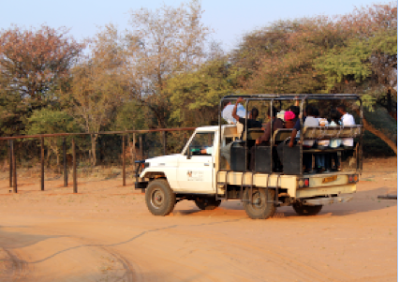

truck

“Arrival” – Reflections by Claudine Chen

IDDS 2015 at D'Kar, Botswana

Arrival 2

By ten we are on the road. Even though we are spaced out, the conversation flows easily. What are you reading, what was your Peace Corps experience like, what are you doing now – it’s like sunrise conversations from college but with people with twice the life experience. Beep beep beeeep beep beeeeeep! Ah, a herd of cows. Beep beep beep beep beeeeeep! Oh, donkeys this time. Beeeep beep beep beep beeep! Were those ostriches?! At lunch we get our first taste of some local starches. Pap is like thick white polenta, and samp is like exploded corn kernels.

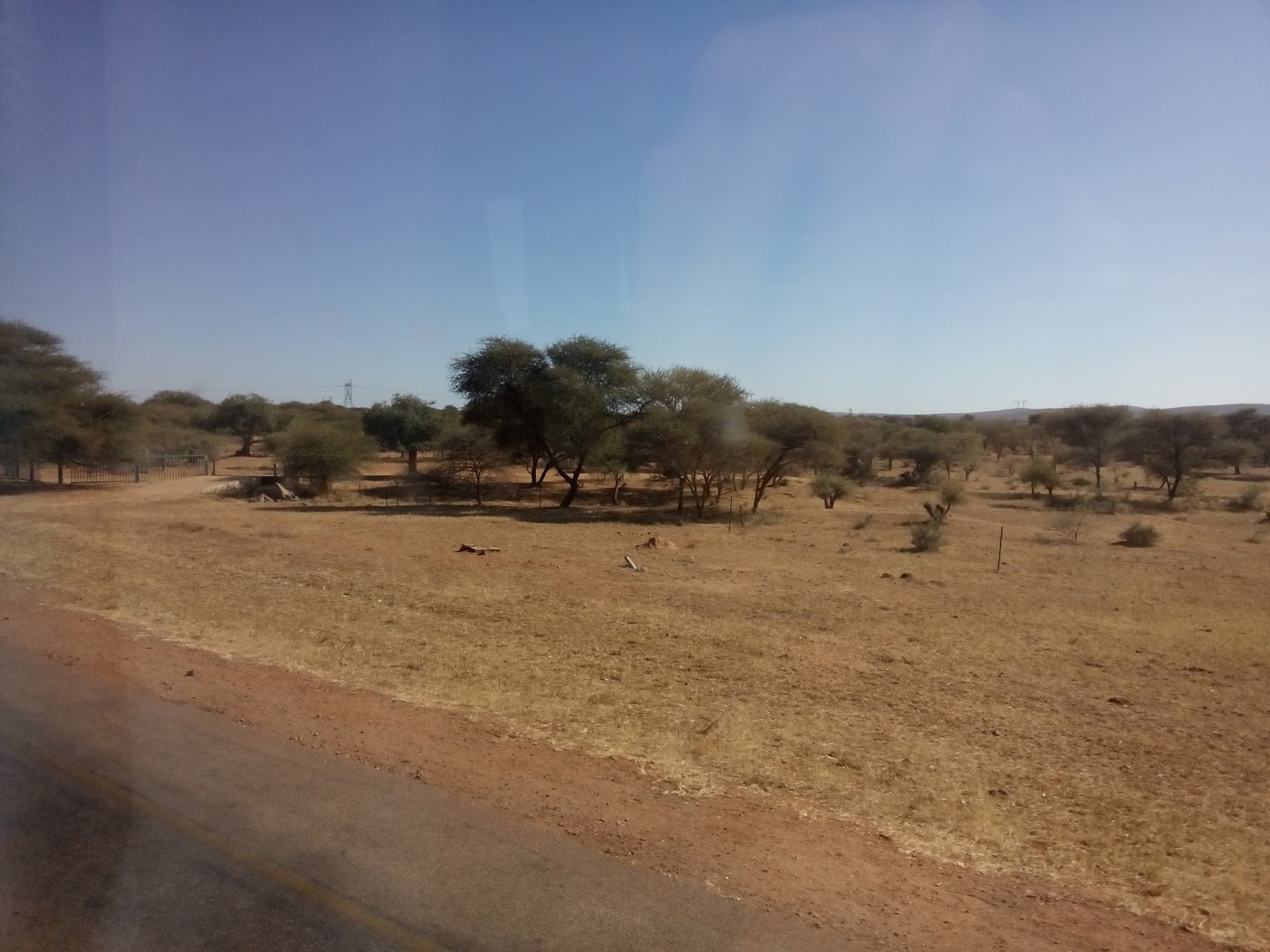
The terrain is sometimes red, sometimes grey. The sun is going down below the horizon with a blaze of orange, and still we are on the bus. We keep crawling forward in the dark, until the black is pierced with the orange warm glow of a roaring fire. We are welcomed off the bus with smiling faces and handshakes all around. We feed, meet our roommates, we sit by the fire, we sleep.

Our facilities are 5 star luxus, especially considering we are in the Kalahari desert. Power in the rooms for charging devices, a cellular tower just next door, hot water in the bathroom, and comfortable beds with two sets of blankets for the cold nights, there is little more we need for comfort in this modern age.

The next morning, we finally can see where we have landed. Outside the dorms there is fire circle. Across there is the kitchen and church. Thorny trees with spiral rattling seed pods threaten to catch your hair if you are not careful.

“Getting There” – Reflections by Participant Claudine Chen

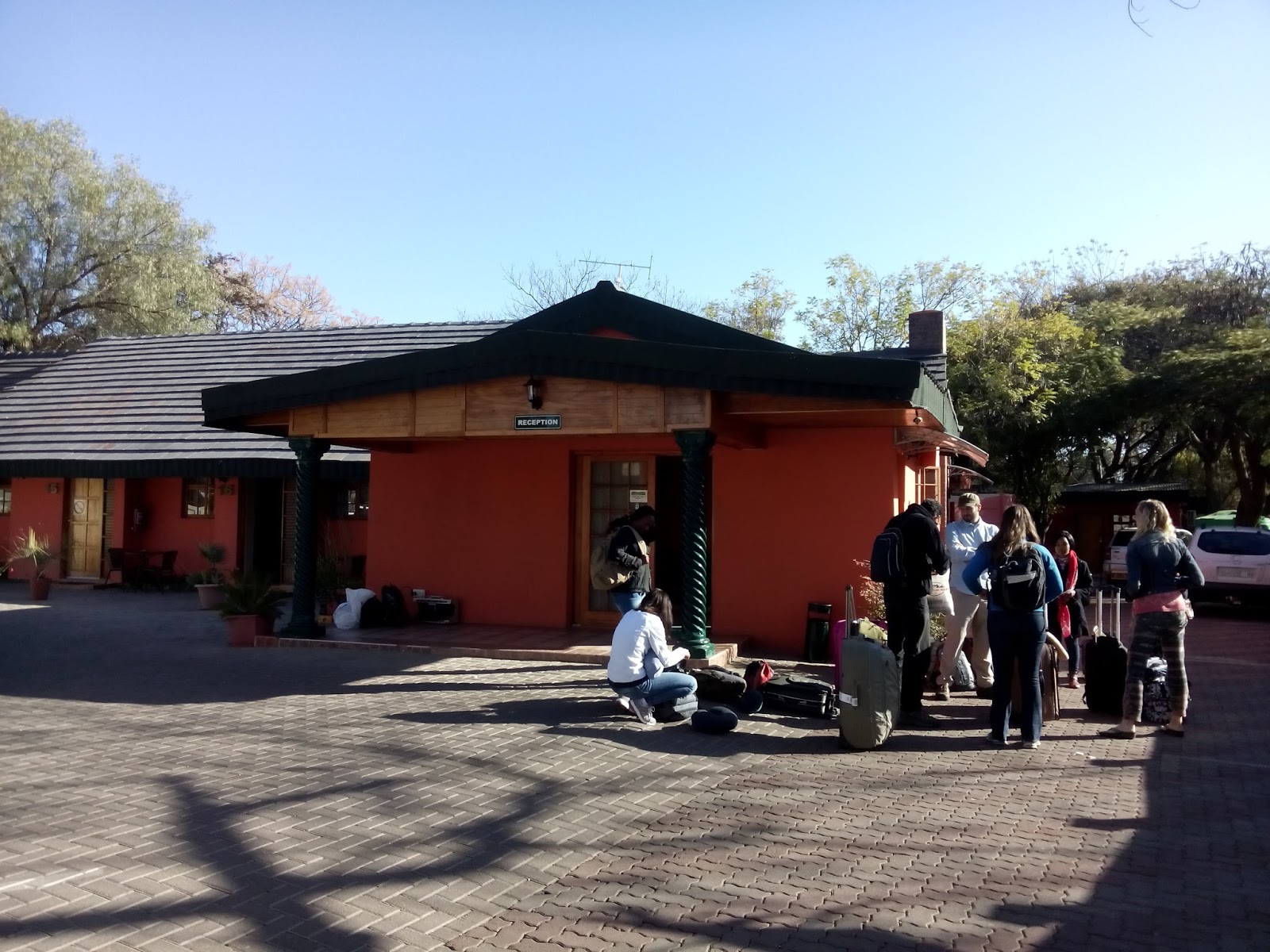
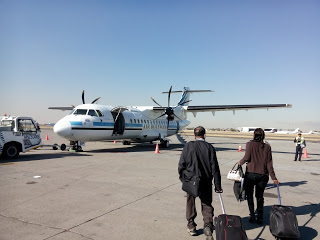
Made it, the Friday night bus to Berlin-Tegel airport. I’ve had a busy week, and I have not mentally prepared for the IDDS that I’ve been looking forward to for months. It feels strange, yet it is a release, to suddenly drop everything happening in my daily life for a completely new experience. There is little time to process what is about to come as I pack the day of my flight, and I as I hop my way towards Gaborone, I make each step closer with the awareness of an automaton. On the last leg to Gaborone, we are herded into a bus, and one by one we pass huge planes about to jet off to distant locations like Dubai or London. Nestled between two giants is our cute twin propeller, and I can’t help but smile. My rowmate joins me soon after I settle into my window seat, and we discover we are both going to D’Kar! Suddenly it clicks, we are going into the Kalahari desert, and the journey has begun.

 plane