Slash for Cash Wins 2025 Transformational Leadership Award

These Hands Founder, Thabiso Mashaba, helped set up the Slash for Cash project. Slash for Cash built a mobile carbonization kiln that converts slash and other woody waste material into biochar and smokeless barbeque briquettes. This process converts slash, which is ordinarily a nuisance, into a revenue source while also sequestering carbon and improving soil health. Slash for Cash expects to remove 4,320 metric tonnes of slash and produce 720 metric tonnes of biochar by the end of 2026. This project has also provided job training to eighteen unemployed community members.

In recognition of its work, New Zealand’s Sustainable Business Network has awarded the 2025 Transformational Leadership Award to Slash for Cash. Slash for Cash is grateful for the award and looks forward to expanding its impact on local communities in New Zealand and beyond.

BUILDING ENTREPRENEURIAL CAPACITY: BA ISAGO UNIVERSITY AND THESE HANDS COLLABORATION

Gaborone – In an era where Innovation and Entrepreneurial spirit are crucial to Economic Growth and Societal Development, BA ISAGO University has taken a significant step forward. By partnering with These Hands Global, Social and Sustainable Enterprise (GSSE) through the signing of a Memorandum of Agreement (MOA), the University is poised to revolutionise how Entrepreneurial capacity is built in Botswana and beyond.

At the heart of this Collaboration lies a shared vision to nurture and develop the Entrepreneurial skills of Students and Community Members, transforming ideas into viable business ventures that drive Economic Growth and create jobs. By combining the Academic rigor and resources of BA ISAGO University with the practical, hands-on approach of These Hands GSSE, this Partnership is set to create a dynamic ecosystem for innovation and entrepreneurship. Through this Partnership, BA ISAGO University, this morning announced the launch of their Short-Term Training in Creative Design Thinking. Design Thinking is an International phenomenon to business ideation and is a non-linear, iterative approach used by Teams or Communities to tackle challenges, redefine problems and devise innovative solutions for testing and prototyping. The Partners anticipate that delegates who come for and complete the training will depart with tangible prototypes ready to be presented to investors.

According to These Hands GSSE Co-Founder, CEO and Lead Instructor, Mr Thabiso Mashaba, a study by the Alliance for African Partnership (AAP) and the University of Botswana revealed that despite substantial Government and Private Sector Investments, many Batswana Entrepreneurs struggle to build sustainable businesses due to a lack of formal training before receiving funding. He pointed out that in countries like Rwanda, entrepreneurs undergo development programs before receiving financial support.

“Our Creative Design Thinking Short Programmes aims to fill this gap by introducing participants to These Hands GSSE’s Co-Creative Design Thinking and Business Thinking Process. This bottom-up approach empowers Participants to understand and tackle Community challenges using local resources and sustainable business practices,” he said.
Furthermore, Mashaba stated that this initiative seeks to equip Participants with holistic Entrepreneurial Skills including innovation, Leadership and Business acumen.

Given the Government’s current focus on bolstering locally owned enterprises across various sectors such as catering, bottled water and transportation services, this Programme aligns perfectly with the goal of empowering Batswana with the necessary tools to thrive in a competitive market environment.
The training will span over 10 days and will cover a range of topics including an introduction to the Co-Creative Design Thinking Process, Empathy exercises, problem identification, idea generation, solution prototyping, testing, gathering feedback and community showcasing. Participants will undergo informal assessments and continuous evaluation to gauge their progress and performance throughout the course.

According to BA ISAGO University, Center for Professional Development Consultancy Manager Mr Zenzo Dube, the Programme will equip both Administrators of initiatives such as the recently launched Government initiative of Chema Chema fund and Informal Sector Startups with the skills to appraise, mentor, fund and scale innovative projects significantly impacting Batswana by creating Sustainable Employment opportunities. He added that to ensure participants apply their skills in real-world ventures, they will join These Hands GSSE’s USSD-based Social Network Platform after the course which provides ongoing support and connects Participants with like-minded individuals, allowing BA ISAGO University and These Hands GSSE to monitor progress and provide necessary Resources or Technical support.

Ultimately, the aim is to cultivate a cadre of Individuals capable of spearheading successful ventures in a rapidly evolving Business landscape. BA ISAGO University and These Hands GSSE are enthusiastic about engaging with Batswana through this transformative training opportunity and collaboration which is aligned with several Sustainable Development Goals (SDGs), particularly SDG 4 (Quality Education), SDG 8 (Decent Work and Economic Growth) and SDG 9 (Industry, Innovation, and Infrastructure). By promoting Entrepreneurship, BA ISAGO University and These Hands will contribute to creating decent work opportunities and fostering innovation, which are critical components of Sustainable Development in Botswana and across the Globe.

These Hands begins operations in New Zealand

Thabiso Mashaba, CEO and co-founder of These Hands, won an Edmund Hillary Fellowship. The prestigious Edmund Hillary Fellowship is awarded to international entrepreneurs who demonstrate exceptional leadership and achievement in their field. The fellowship is based in New Zealand and this has given These Hands the unique opportunity to share its co-creative design process on the international stage. These Hands has gotten off to a running start in New Zealand. Mr. Mashaba has settled in at Tolaga Bay, which is on New Zealand’s North Island. In collaboration from the Tolaga Bay Innovation Hub, These Hands has quickly launched a new project called Slash for Cash.

Slash for Cash is a solution for addressing the large amounts of “slash” that has been rapidly accumulating. Slash is the woody waste product that is remaining after logging operations and can include items such as bark, branches, and sometimes even abandoned logs. Unfortunately, large amounts of slash can cause problems for the surrounding community. Since slash is a woody material, it is flammable and can increase wildfire risk. Slash can also become problematic during flooding. Earlier this year, Cyclone Gabrielle made landfall on the North Island. During this unprecedented storm, slash was washed into rivers and clogged them, which caused flooding. Slash, when washed downstream, can also cause large amounts of property and infrastructure damage. Large amounts of slash were also washed downstream into the ocean and onto beaches. Since slash degrades very slowly, it has to be managed and cleaned up to prevent these problems. However, clean up efforts are very expensive.

These Hands worked with the local community to launch the Slash for Cash project. This project aims to address the slash problem by transforming slash into biochar, which is a useful end product. These Hands brought together community members and worked together to develop a process for producing biochar. Slash can be converted to biochar using a process called pyrolysis. When slash is heated in a low-oxygen environment, it degrades and releases gases. After this process is completed, the remaining byproduct is solid carbon or biochar. This biochar can be used for a variety of purposes. Biochar is commonly used as a fuel for barbecuing. However, it can also be mixed with animal waste and converted to activated biochar. Activated biochar can then be applied as a soil additive for forests or farms. This helps to improve the health and quality of the soil. Furthermore, since biochar is a stable substance, it can help to combat climate change by sequestering carbon.

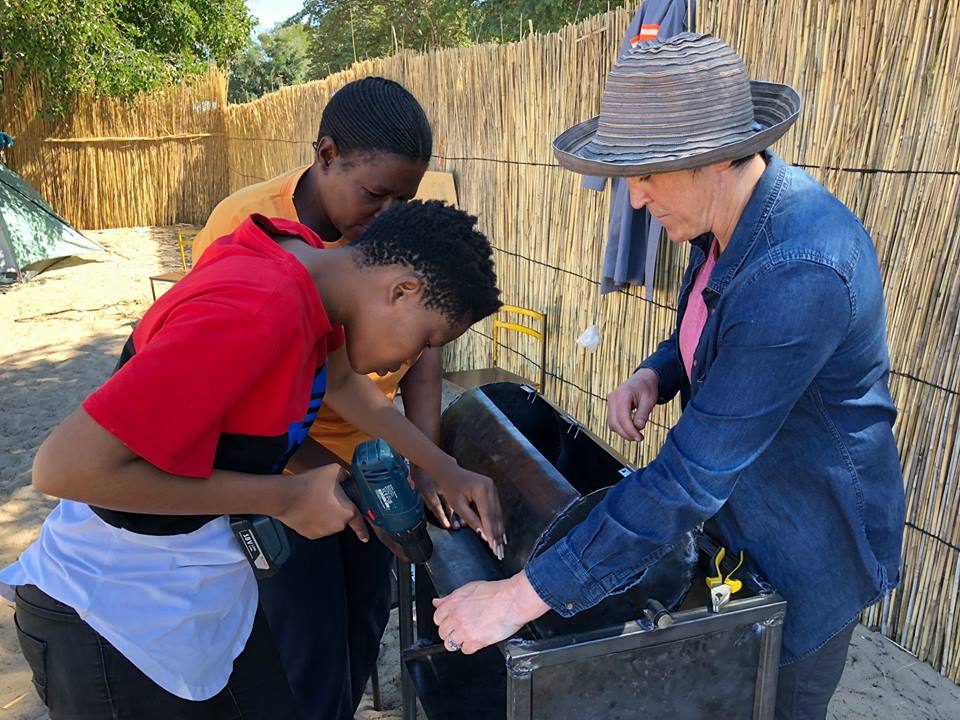
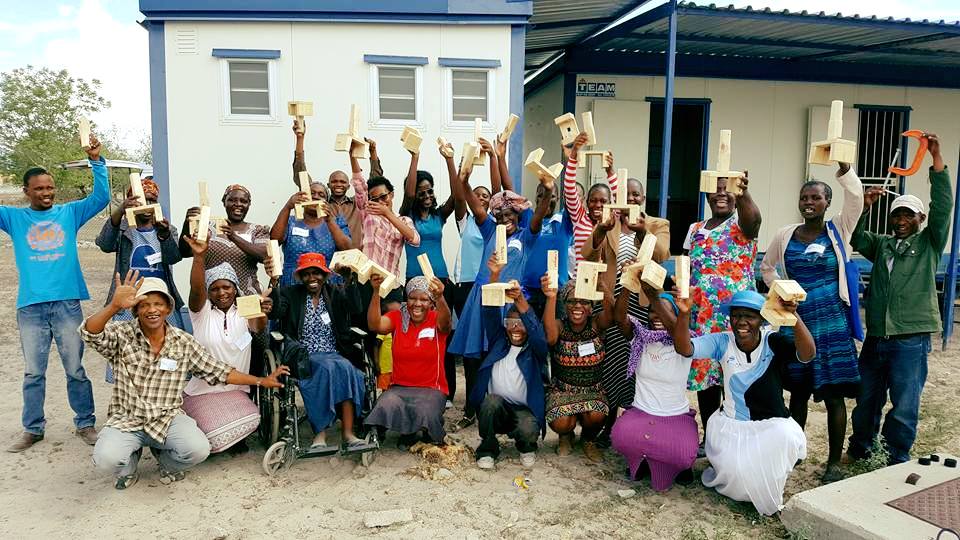
Under Slash for Cash, These Hands hosted a skills building session to introduce the local community to the co-creative design process. Participants learned how to build metal buckets that are used to contain the pyrolysis reaction and then were taught how to produce biochar. Afterwards, participants were taught how to press the biochar into briquettes and how to produce activated biochar. Since biochar has commercial value, These Hands also worked with participants to develop a business plan for scaling up production. This business plan was pitched at the Tech Stars Startup Weekend Tairawhiti, where it won the second-place prize.

Slash for Cash marks the first time that These Hands has showcased its co-creative design process on the international stage. Previously the design process had been primarily deployed in Botswana and other African countries. However, Slash for Cash is a major step forward because it demonstrates the viability of the design process in the Oceania region. It is also a tangible case where indigenous knowledge from a developing country was applied to solve an environmental challenge in a high-income country. These Hands will expand the Slash for Cash project and aims to identify solutions for other local challenges in New Zealand.

The Slash for Cash project was featured in an interview that was broadcast on Radio New Zealand.

You can find more information about our work in the Tolaga Bay Skills Builder Report and the Ruatoria Skills Builder Report.

These Hands Facilitates Local Technology & Enterprise Development in the Southern African Development Community

These Hands has successfully assisted communities in the Southern African Development Community to develop technological solutions to local development challenges. In 2017, These Hands helped cofound the International Development Innovation Network – Southern African Development Community (IDIN-SADC) in partnership with the Kafue Innovation Center in Zambia and the Twende Social Innovation Center in Tanzania. IDIN-SADC works with local communities to develop technologies that help to address local development challenges. IDIN-SADC achieves this by promoting grassroots innovation, providing training on engineering and design processes, and connecting communities with outside expertise to collaboratively design technology that addresses local developmental and livelihood problems.

IDIN-SADC received funding from the Finland Ministry of Foreign Affairs’ Southern Africa Innovation Support Program and the Letshego Group to launch the Recruiting, Retooling, Up-skilling, Profiling, and Connecting Confident Grassroots Innovators in the SADC Region Program. This program aimed to increase the support IDIN-SADC provides to Botswana, Zambia, and Tanzania and to expand services into other SADC countries. The program also aimed to develop at least five technologies that will improve livelihoods and to help commercialize these technologies.

IDIN-SADC managed this project in 2020 and 2021. IDIN-SADC held multiple community engagement and development events to train local communities in the design process and to develop technology. This effort included 51 Built It Training Sessions, 32 Creative Capacity Building Workshops, and 15 Business Workshops. These sessions helped to recruit local innovators, teach the design process, and provide training on how to commercialize the technologies developed and bring them to market. IDIN-SADC also awarded 30 grants to innovators so they can continue refining their technology and develop business plans. Some of these technologies have been brought to market and are now in the early stages of commercialization.

One of the most notable success stories from this project was the Creative Capacity Building workshop held in Moiyabana, Botswana. This workshop was held in September 2020. 20 unemployed youth attended this workshop to develop design skills. The participants of this workshop developed four technology prototypes including a fodder chopper, a brick molder, a charcoal-powered popcorn machine, and a water-efficient garden system. The participants developed business plans for each of these technologies and presented at a business exposition. During the exposition, the participants sold one unit of the water-efficient garden system, two units of the brick molder, and multiple servings of popcorn. Since the exposition concluded, the participants have sold an additional brick molder and have manufactured and sold bricks. In addition, they have developed prototypes for a clothes hanger and a gravesite shade stand. Sales from these technologies have generated about €1,400 in revenue since the exposition. Some of the proceeds will be reinvested to start up a business that manufactures and sells wire fencing.

This project was a resounding success and helped to foster innovation, technology development, and entrepreneurship in numerous communities throughout the SADC region. These Hands will continue to support these entrepreneurs and will build on the successes of this project to expand our services to additional communities.

You can find more information about our work in the IDIN-SADC Final Impact Report

IDDS 2018 Final Report

After several months of hard work, These Hands has successfully hosted the 2018 International Development Design Summit. This summit brought together development practitioners, engineers, and designers with local communities in rural Botswana. These teams collaborated with local entrepreneurs and innovators in D’kar, Dutlwe, Rakops, and Kaptura to create technologies that address local development challenges. The teams developed several technologies like peanut roasters, deep-sand wheelbarrows, hydroponics fodder, elephant repellent, bean threshers, dough mixers, and elephant dung paper. The teams also developed an accompanying business plan for their technologies. These business plans will serve as a roadmap for creating enterprises based on these technologies and generating income for the community.

prototype

The 2018 International Development Design Summit produced many new technologies and facilitated knowledge sharing between local innovators and international development practitioners. However, the Summit also produced many new friendships, connections, and a sense of camaraderie between local communities in Botswana and the international development community. These connections will open up many new opportunities for collaboration. We will continue to foster this spirit of cooperation and we look forward to seeing the effects that the Summit will have on these communities.

View our final report: IDDS Botswana 2018 Final Report

IDDS Botswana 2018 Participants Selected!

We want to congratulate all the international participants who have been selected to participate in IDDS Botswana 2018.

These participants will be joined by 16 other local participants which includes 4 participants from each of the host villages and innovation centers of Dkar, Dutlwe, Rakops and Kaputura. These participants will work on 8 hands-on projects under the theme “IMPROVING RURAL COMMUNITY LIVELIHOODS IN BOTSWANA” from 15 July – 13 August 2018!

A very special thank you goes out to each of the reviewers who ensured each applicant was considered at a personal level, and to all the applicants who took the time to craft wonderful applications!

Follow link to learn more about our 2018 participants:

https://iddsbotswana2018.wordpress.com

To learn more about IDDS follow this link: www.idin.org/idds

Value of Culture 2018

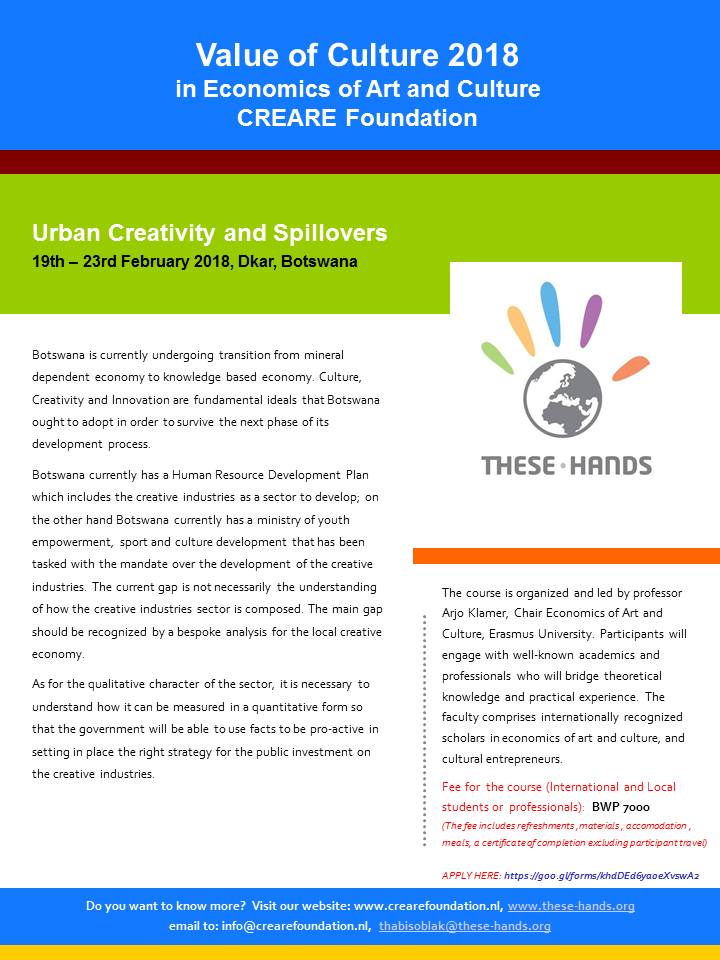
These Hands is pleased to announce that it will be hosting a Value of Culture 2018 course in D’kar, Botswana from 19-23 February 2018. This course, which is run in partnership with the CREARE Foundation, will allow policymakers, artists, and academics to learn about the role that cultural and creative industries play in economic development and diversification. The course will showcase recent cultural and creative enterprises in D’kar Botswana and the impact they have had on the local community. This course will be led by Professor Arjo Klamer from Erasmus University, Rotterdam with assistance from These Hands GSSE and the D’kar Innovation Center.

Value of Culture 2018 Flyer

Value of Culture Practical

These Hands Promotes Technological Innovation

The These Hands team has been very busy over the last few months. Since the successful completion of the D’Kar Innovation Center and the conclusion of the 2016 International Development Design Summit (IDDS) in D’Kar, our work has aggressively expanded. During IDDS, development practitioners and engineers from around the world worked alongside the local San community to create new technologies that are intended to address local development challenges. In the process, development practitioners were able to pass on technical skills to the community and learned more about San culture and the development challenges that they face.

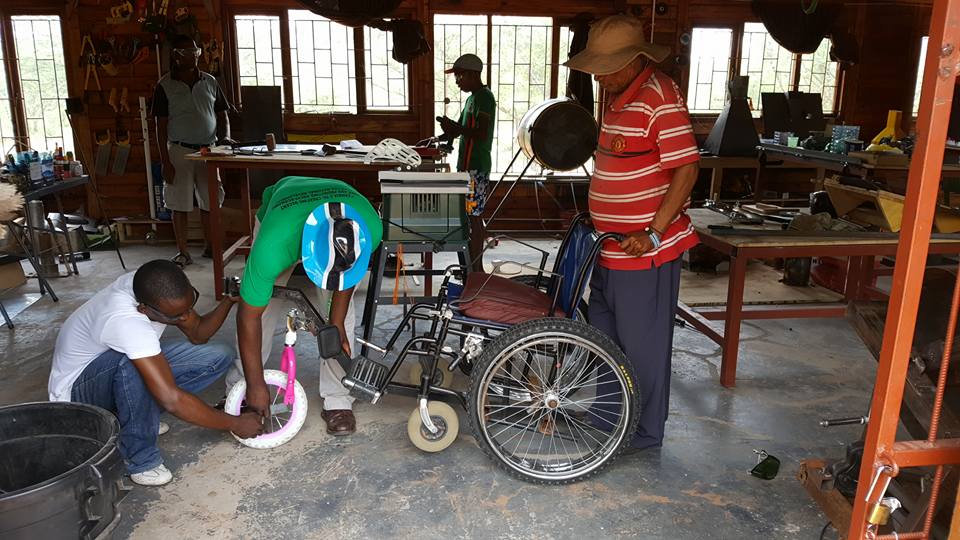
IDDS resulted in several prototypes of new technology. These prototypes included interlocking bricks that can be used to quickly construct durable shelter, a machine that quickly and safely shells locally grown Morama nuts, a human-powered washing machine, a solar furnace that can be used to mold glass beads, a wheelchair that can function in the sandy terrain of the D’Kar region, and a stove that is powered with biofuels. Since the Summit, These Hands has continued to support the development of these prototypes and other technology that was developed in previous years.

Deep Sand Wheelchair, IDDS 2016 D'Kar

These Hands has also focused on the expansion of its activities. Over the last few months, we have run creative capacity-building workshops in other communities in rural Botswana. The objective of these workshops is to take the lessons learned during IDDS in D’Kar and share them with other communities. These workshops have recently taken place at BIUST University, Dutlwe Village, Rakops Village, and Kaputura Settlement, which face similar development challenges as D’Kar. During these trainings, local community members were taught how to build charcoal presses and were provided with instruction in engineering, metal-working, woodworking, and design. The participants of these creative capacity-building workshops also expressed an interest in starting up Innovation Centers in their respective villages.

creative capacity building training - Rakops, Botswana

These Hands had a very successful last few months and we are looking forward to our upcoming adventures in 2017.

IDIN Microgrant-Funded Social Enterprise Launches Unique International Development Social Media Platform That Doesn’t Require Internet Access

This article originally appeared on IDIN.org and can be found here.

These Hands Social Network Home Page

Many developing countries have low levels of internet usage, often times resulting from a lack of internet infrastructure. However, in places where the internet is available it is often prohibitively expensive for the average person to use. Unfortunately, this has created a “digital divide” that has left these developing countries disconnected from the rest of the world. This has been particularly true for rural communities in developing countries who have the lowest rates of internet usage. The digital divide creates many problems for these communities as it keeps them underdeveloped. Many of these communities wish to lead their own development projects. However, their lack of connectivity leaves them unable to engage or continue with development experts to obtain technical and financial assistance for their projects. This lack of connectivity can also thwart attempts at entrepreneurship, which can greatly reduce poverty.

These Hands Global Social and Sustainable Enterprise is a for-profit social enterprise based in Botswana that is set on leading the fight to bridge the digital divide that many rural communities face. These Hands aims to combat the digital divide by creating a social network that will support community-led development in impoverished countries. It will do this by connecting local communities with the resources, business services, and mentors that they need to support their own development initiatives. This social network will also not require internet and can be accessed with a widely available 2G mobile phone, making it accessible to the vast majority of the developing world. This network will allow these communities to overcome the digital divide and take greater ownership of local development.

Having already contributed substantially to development projects in Botswana by hosting the 2015 International Development Design Summit in Botswana and by leading the way to establish the D’Kar Innovation Center, a proposed technology and enterprise development center that will serve the D’Kar community and other San communities. With the release of its social network, These Hands is primed to help start and support numerous development projects around the globe and ensure information access and continuity. The potential social impact of these projects is nearly limitless.

The challenge of ending poverty in the world is daunting. However, the world can confront this problem through a systemic approach that will have the creative industries being the main drivers to coming up with innovative solutions to our daily development challenges.

As we launch our These Hands social network, we invite you to register as member of the network, connect with others, discover and implement sustainable solutions to the world’s problems. Our greatest hope is that this endeavor will pave way to our successful journey towards the sustainable development of Botswana, Africa and the World.

For regular updates, find us on Facebook or visit our website to register for this new service!

Presentation Day

Presentation Day IDDS 2015

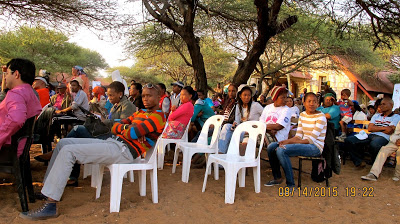
We got a great showing! We kept having to pull out more benches from the church to seat the people coming. I hope our audience found our prototypes interesting – as a participant, I was impressed with what we were able to do in just two weeks, especially considering that our prototypes were constructed in just four days. Internally, and I know I was not alone in this feeling, I wish we had more time to iterate through the feedback and innovation process. Not everyone’s first tries will feel successful – however, and I know this from my experiences from hackathons as well – we are also not good judges of the value of what we create. We will have baggage of intentions and expectations, and our audience can judge our first drafts based on merits alone, and often it’s much better than what we think. Some community members expressed concern about the what next? You all leave and then what? I know that a parallel process to answer this is underway, so that the local community should have enough interest to express this concern rings of some success to me.

Written by: Claudine Chen

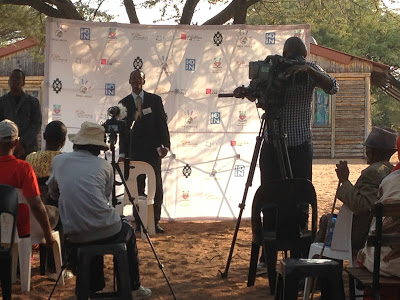
 IDDS 2015 Closing Ceremony